


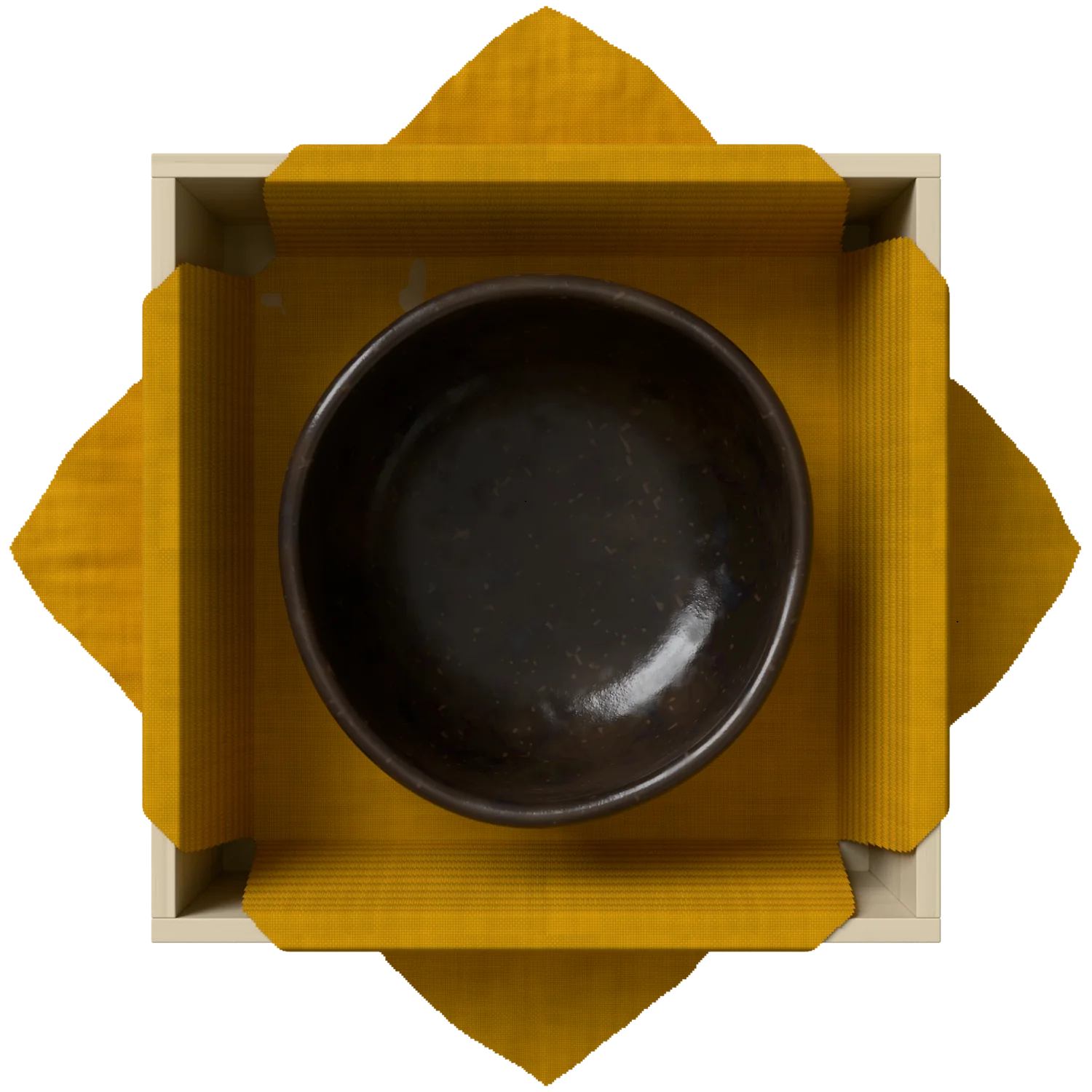
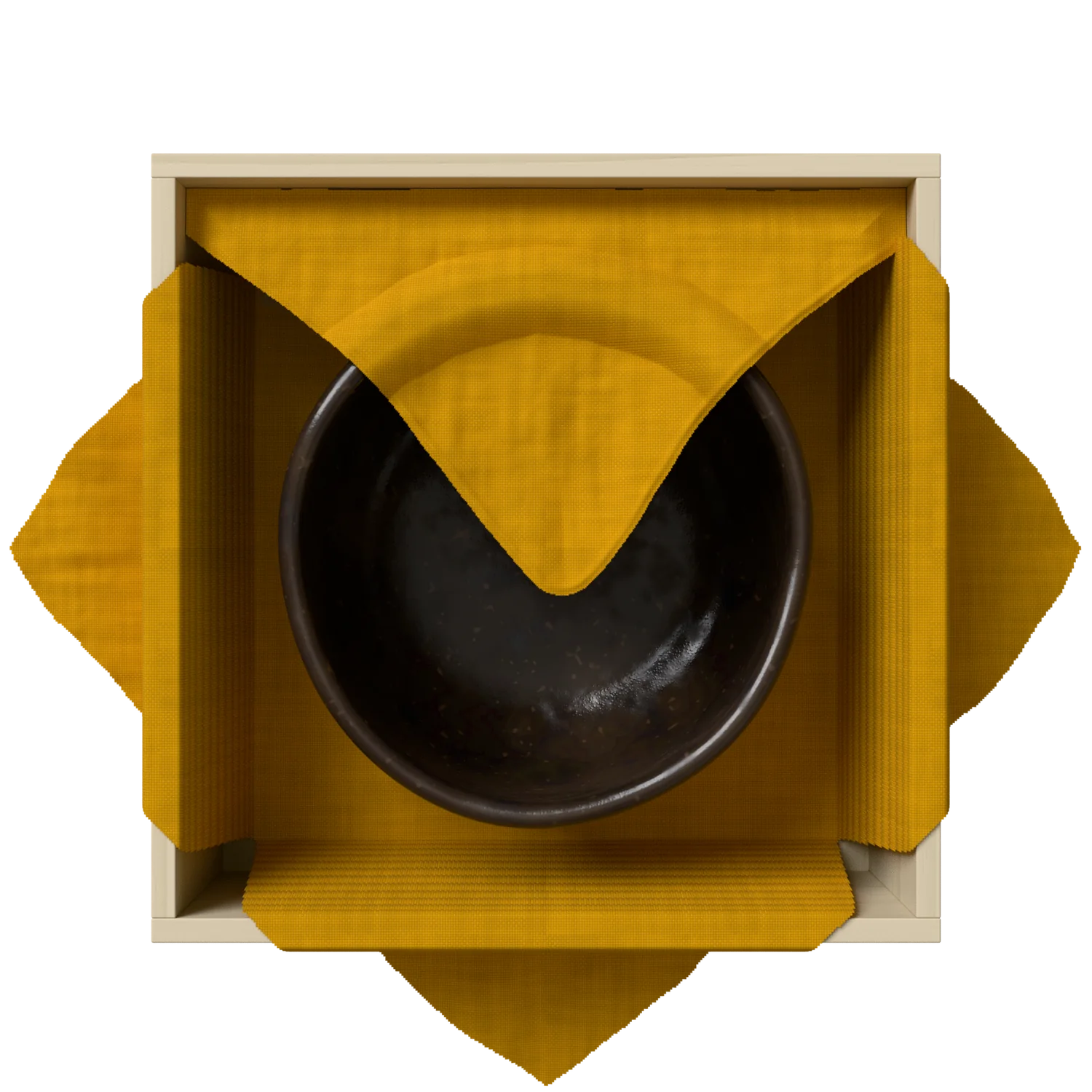




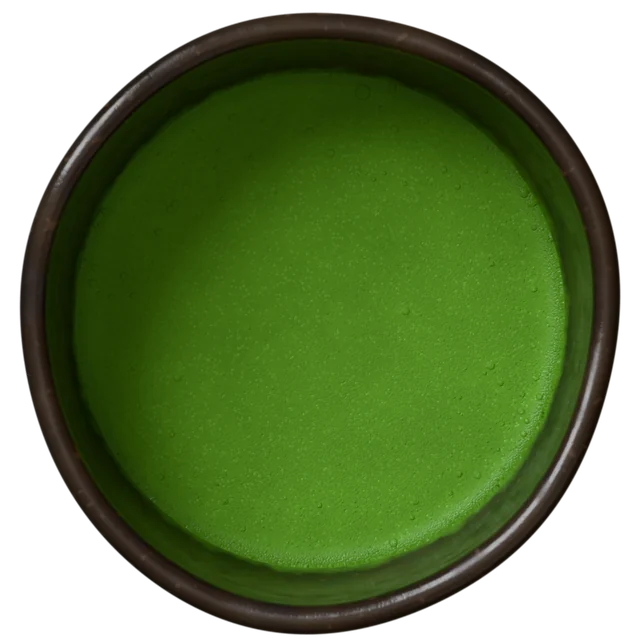
One bowl
takes a year.
And an hour, and twenty seconds, in that order. Then it is gone in three sips. Untie the box and count it through.
The bowl is empty.
Black raku, from the hand, not the wheel. What fills it began twelve months ago, under a net.
一年
Picked once a year.
The finest matcha comes from the first leaves of spring. The bush spends the other eleven months getting ready.
1 harvest in 12 months
二十日
Twenty days in the dark.
Before picking, the rows go under black nets or reed screens for twenty days or more. Starved of sun, the leaf keeps its theanine instead of turning it into bitter catechin, and floods itself with chlorophyll. That is the sweetness, and that is the green.
0 days 覆下栽培 ōishita saibai, shaded growing
八十八夜
The eighty-eighth night.
Counted from the first day of spring. In 2026 it falls on 2 May, the old sign that the frosts are over. In Uji, picking begins in the weeks that follow. The leaf is steamed the same day, dried flat, and its stems and veins are sifted out. What is left is called tencha.
88 days 八十八夜 · 碾茶 hachijū-hachiya · tencha




茶臼
One hour for one tin.
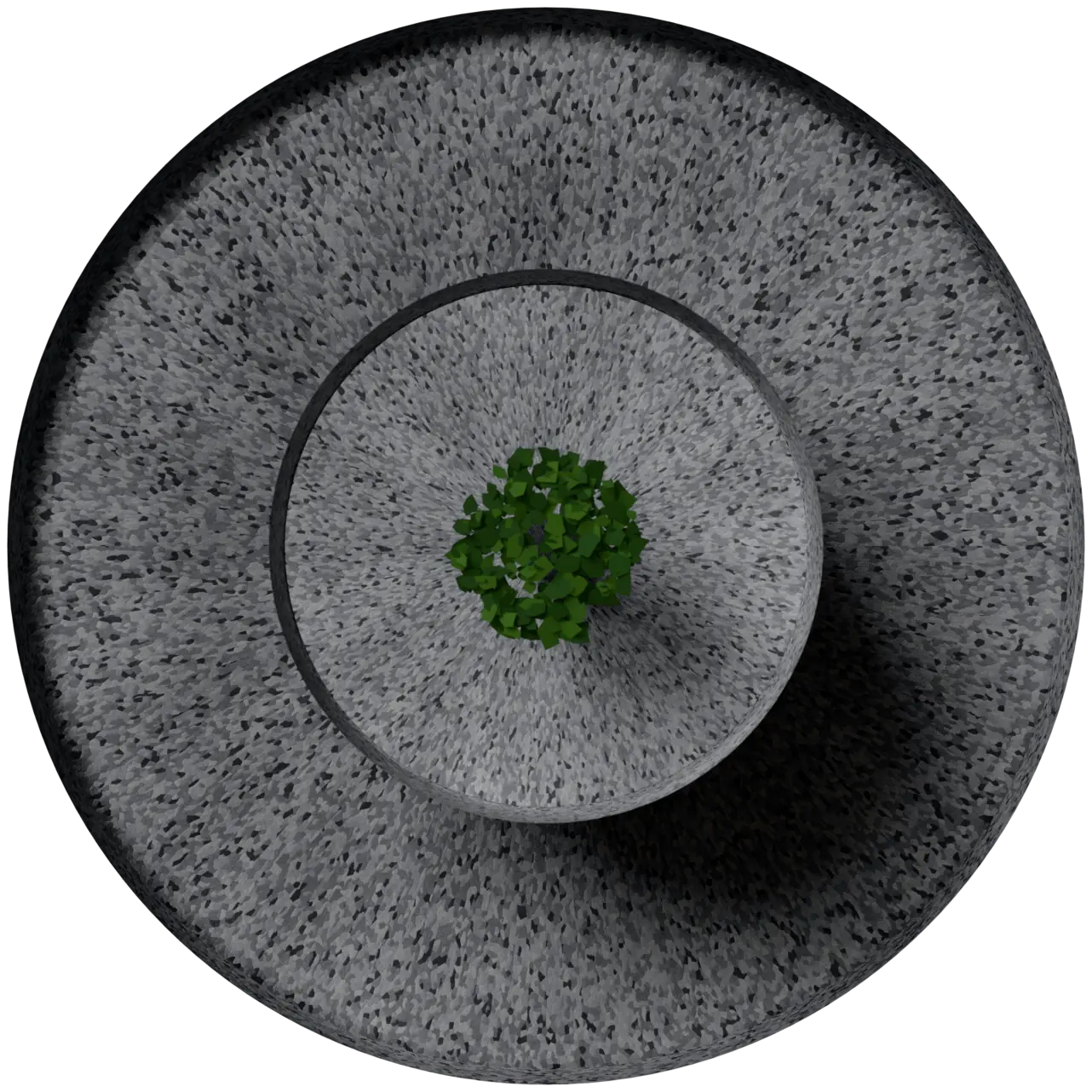
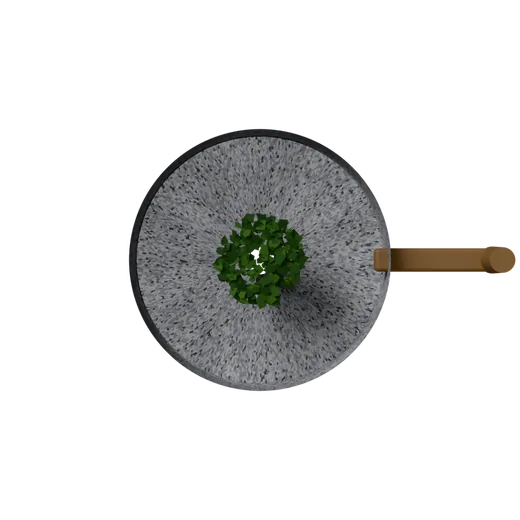
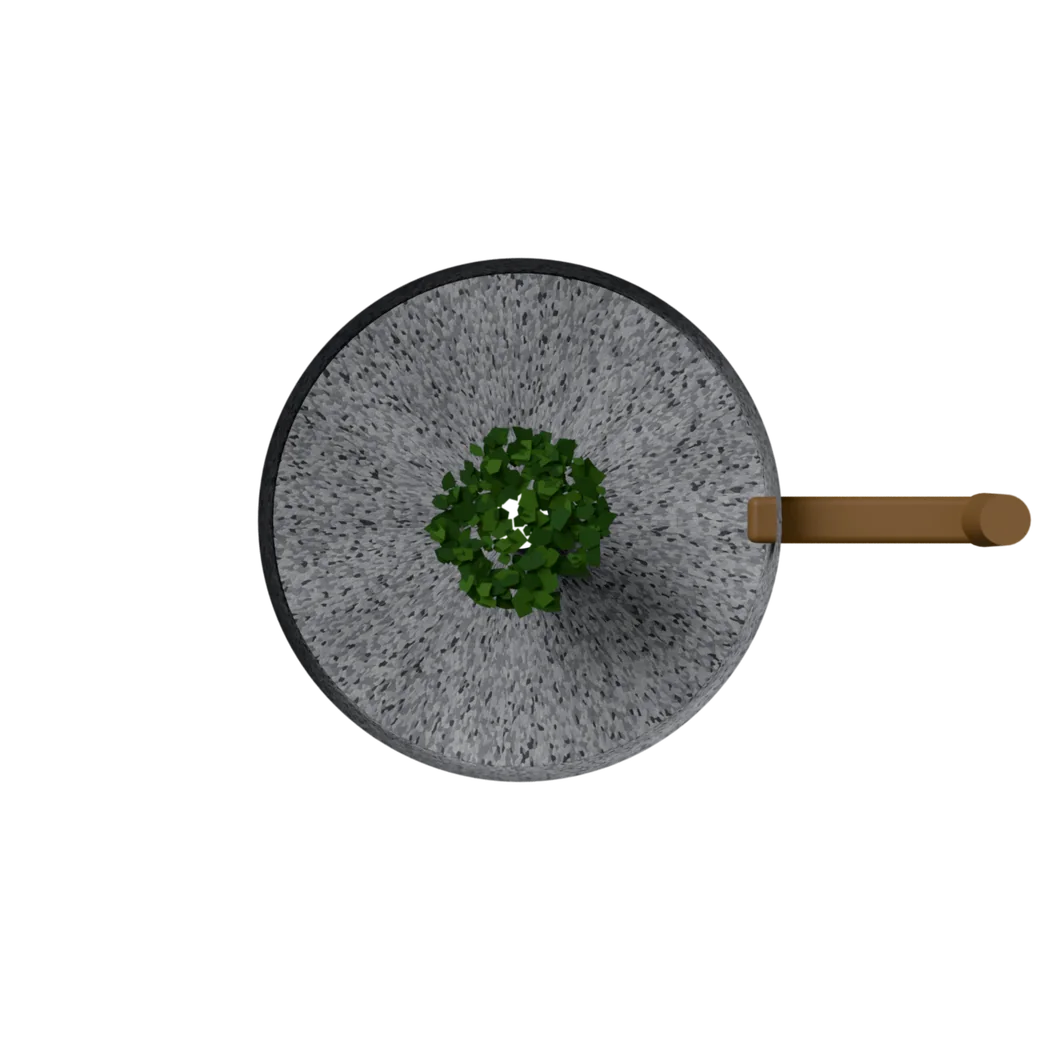
A granite mill turns about once a second and gives roughly 40 grams of matcha an hour. Turned slowly, the stone stays cool enough to keep the colour and the scent. What falls from it is near 10 microns: fine enough to hang in water.
0.00 g ground 0:00 at the stone
Scroll to turn it. Your bowl needs 2 grams.
釜
Eighty degrees, not a hundred.
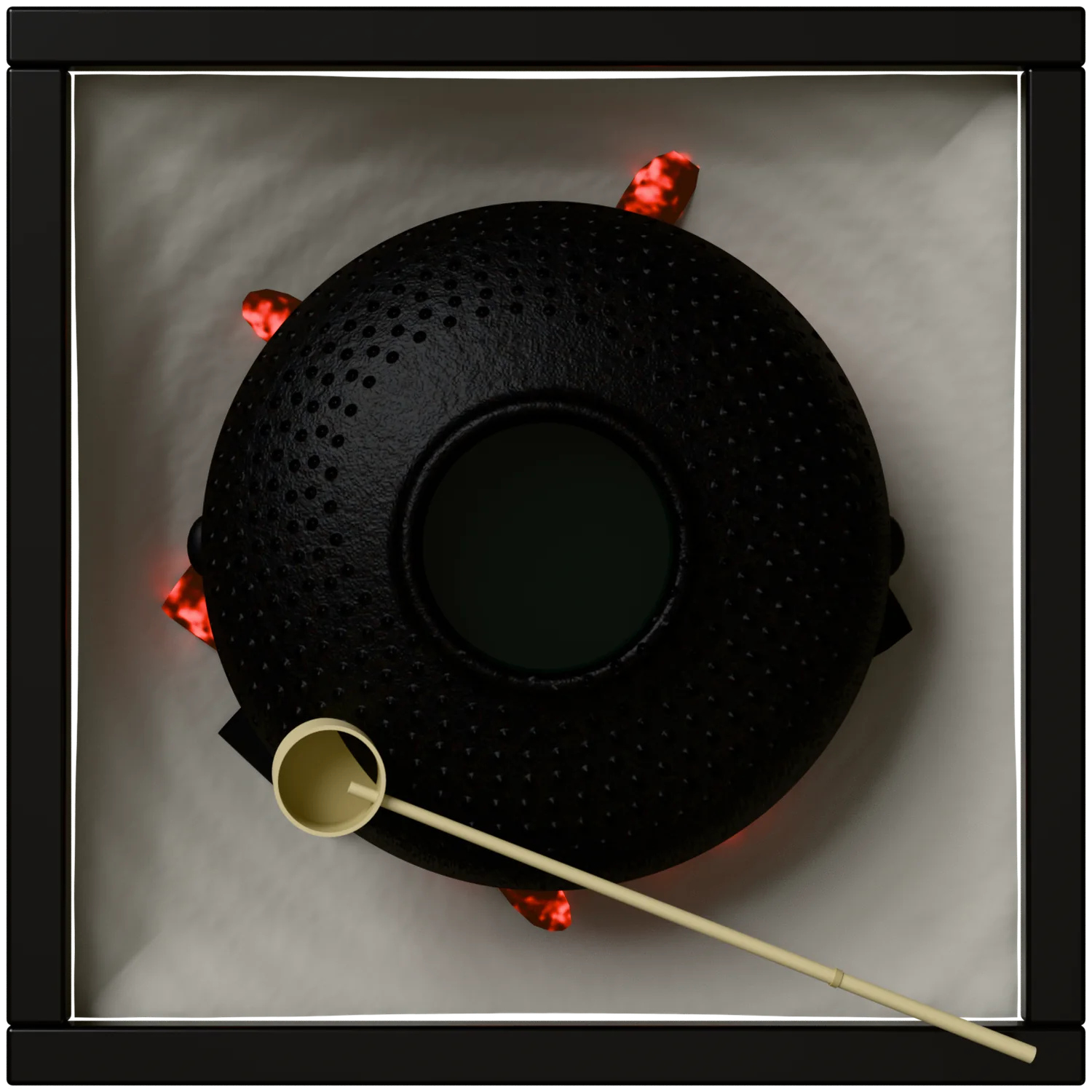
For thin tea the water comes off the boil to about eighty degrees. Hotter, and the bowl turns bitter. The sound a kettle makes when it is right for tea has a name of its own: matsukaze, wind in the pines.
100° C 松風 matsukaze



-
篩う
Two grams, sifted.
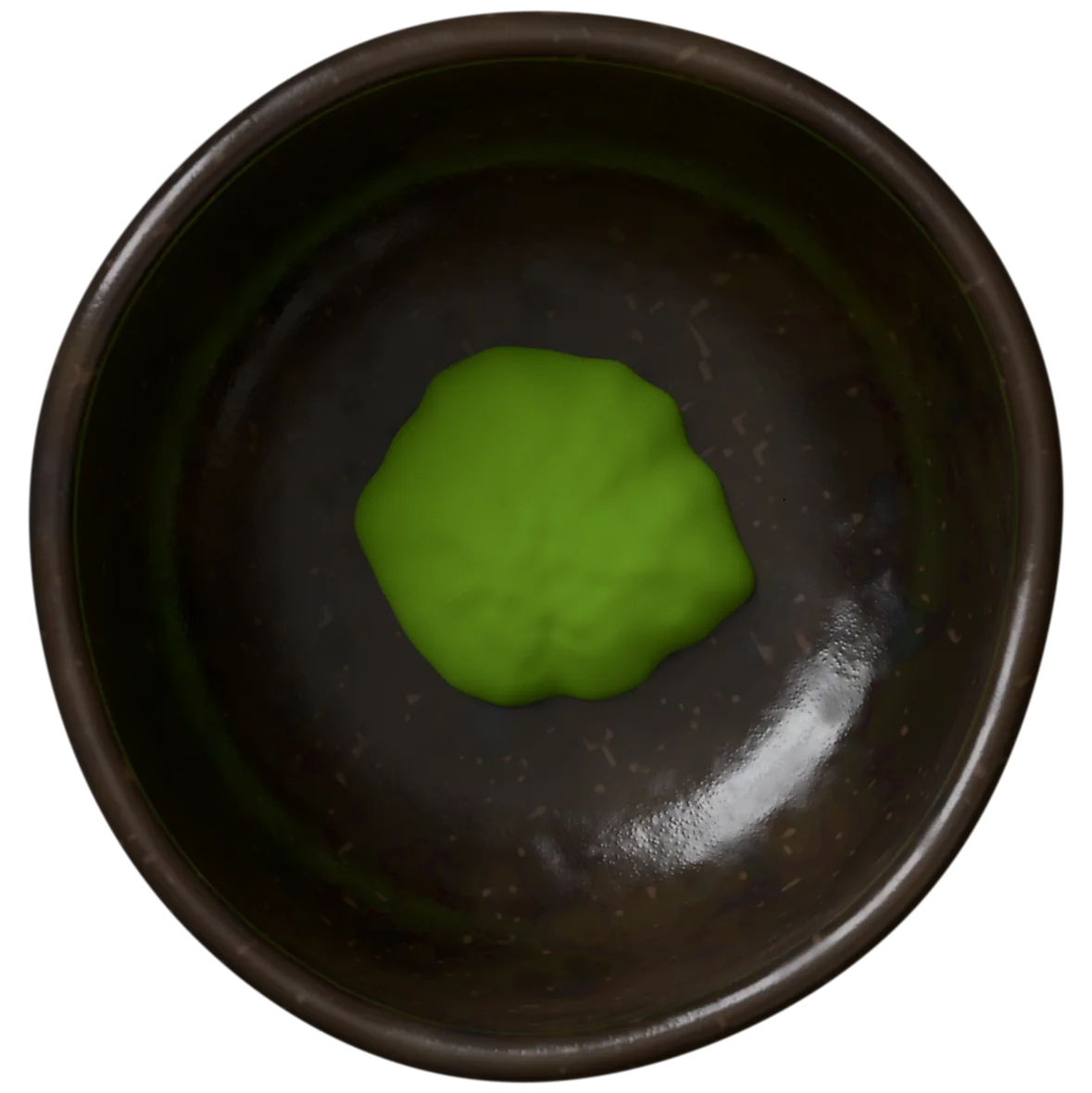
About one and a half heaped scoops, pushed through a fine sieve so nothing clumps.
-
注ぐ
Seventy millilitres.
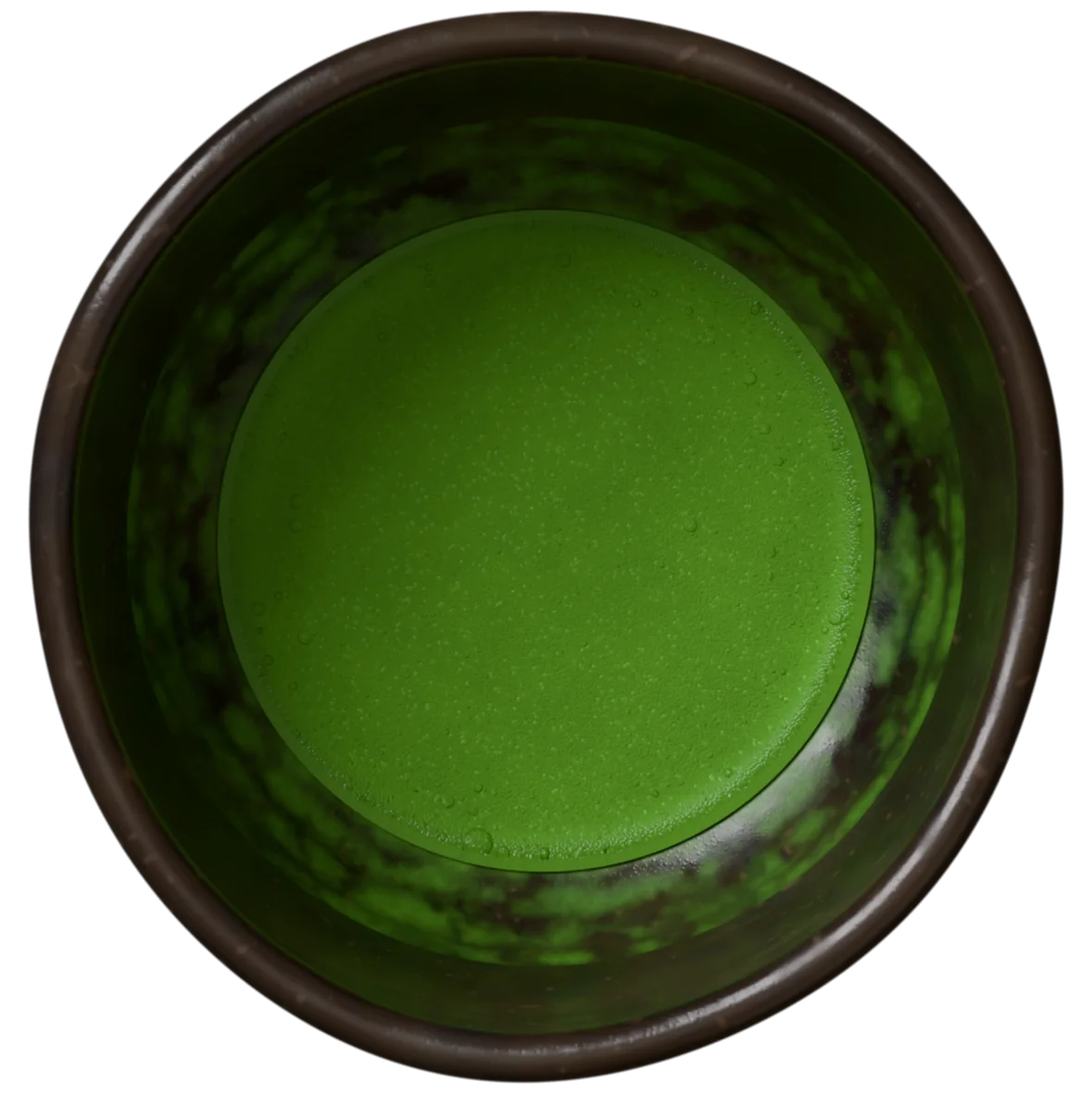
Water from the kettle, near eighty degrees, poured down the side of the bowl.
-
点てる
Twenty seconds. Yours.
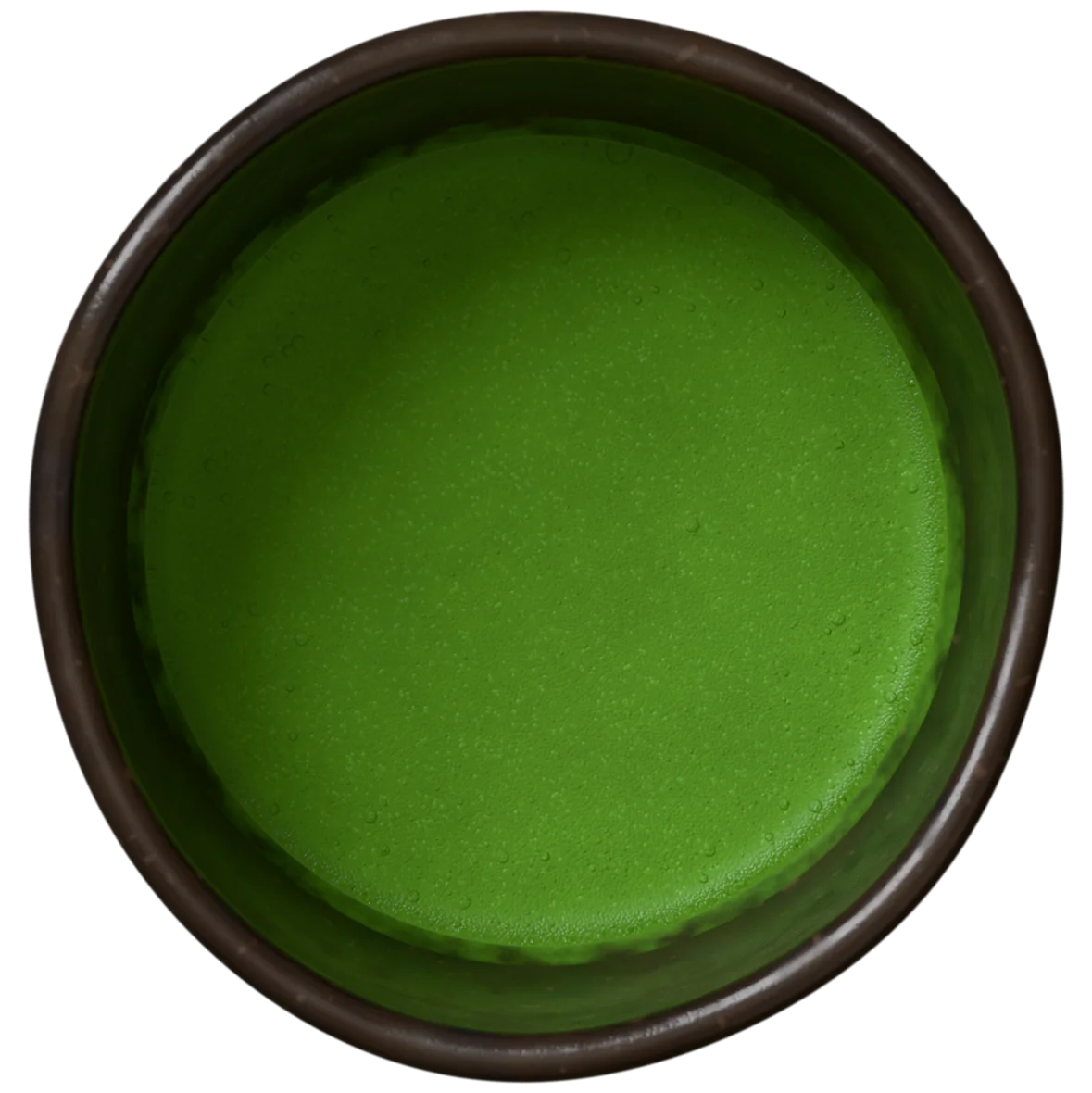
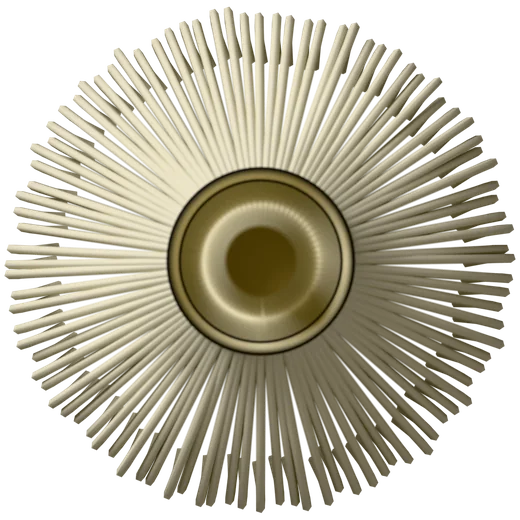
Move the whisk through the tea, fast, back and forth in an M. Not in circles. The count only runs while you whisk, and it cannot be undone.
00.0 s 0 strokes
-
吸い切り
Three sips.
Thin tea is finished in about three sips. The last is drawn in with a small sound, suikiri, to say that it was good.
0 of 3
午後三時
Three o’clock, two ways.

| Coffee | Measure | Matcha |
|---|---|---|
| Spikes, then dips | Energy | Calm and steady |
| The 3pm crash | Afternoon | A slow, even release |
| Jittery | Focus | Clear and settled |
| Caffeine on its own | What carries it | Caffeine with L-theanine |
| Coffee breath | Aftertaste | Fresh and green |
Stir either one.
芳名帳
From the guest book.
Sample entries, held for the first real ones.

It will not be made again.
It took a year and lasted three sips. Tea has four characters for that: ichi-go ichi-e, one time, one meeting. The thought is Sen no Rikyū’s. The four characters were fixed by Ii Naosuke, nearly three centuries later.
1 bowl whisked today
Fifteen tins. Fifteen greens. From Ippodo and Marukyu Koyamaen to our own three pouches.